
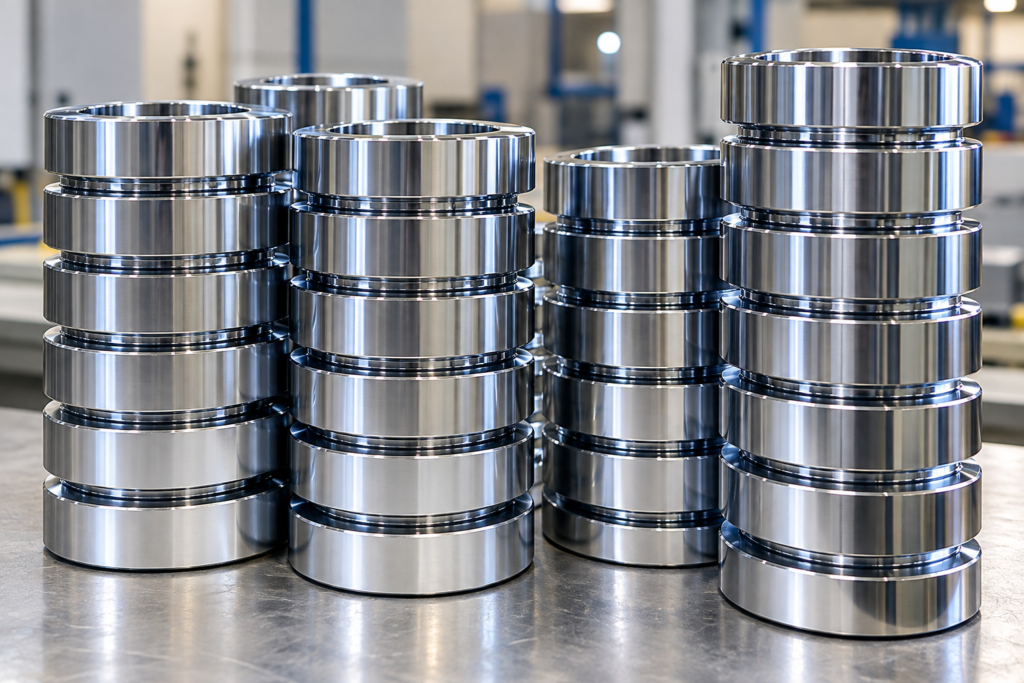
Alkaline Zinc Plating Bhiwadi becomes the real question once a manufacturer starts shipping brackets, enclosures, or anything with internal cavities to a finishing shop and keeps getting parts back with thin spots nobody can quite explain. The part looks fine from the outside. Open it up or check inside a recess and the coverage just is not there.
Most manufacturers chasing this problem assume it is a quality control issue on the shop floor. More often than not, it is the bath chemistry itself, an acid process that simply cannot reach deep into a cavity the way the part actually needed.
Alkaline Zinc Plating Bhiwadi exists for exactly this situation. The higher pH bath uses complexed zinc ions that spread more evenly across a surface, reaching into recesses and internal threads that a faster acid system tends to leave bare. Manufacturers who switch over for complex geometry parts tend to see rejected batches drop noticeably within the first few orders.
Zinc Electroplating Services Bhiwadi built around this chemistry have become the default choice for manufacturers dealing with cavity heavy parts, and Vinita Enterprises has shaped its entire Bhiwadi operation around getting that coverage right consistently, order after order.
What Alkaline Zinc Plating Bhiwadi Job Work Actually Means
Job work means sending parts out to a specialist who finishes them and ships them back, with payment running per piece or per kilogram instead of a manufacturer owning a plating line outright.
For a business dealing with seasonal order swings, that arrangement beats carrying the fixed cost of tanks, chemical disposal, and dedicated staff year round. Capacity scales with demand instead of sitting idle half the year.
Why Zinc Electroplating Services Bhiwadi Lean on Alkaline Chemistry for Complex Parts
Complex shapes, deep recesses, folded brackets, anything with internal geometry, all put real stress on a plating process, since current does not reach every surface evenly on its own.
The slower reaction speed in an alkaline bath actually works in a manufacturer’s favor here, letting zinc distribute more uniformly rather than piling up near whatever surface sits closest to the anode. That is really the whole reason this chemistry gets chosen over acid zinc for anything with cavities worth worrying about.
How Pricing Works for Alkaline Zinc Plating Job Work
Cost comes down to part complexity, coating weight, order volume, and whether passivation gets added on top of the base layer.
Simple, open shaped parts cost less to plate than something riddled with blind holes or folded sections, since those require more careful positioning in the tank and closer monitoring during the run. An itemized quote beats a flat per kilogram number almost every time once the actual geometry gets factored in.
Turnaround and Batch Size Expectations
A standard batch typically clears cleaning, the alkaline zinc bath, and passivation within a day or two, depending on how complex the parts are and how busy the shop happens to be that week.
Small prototype runs usually cost a bit more per piece before volume pricing kicks in, which is fairly normal across most job work arrangements. Worth asking about minimums directly rather than assuming every shop runs the same policy.
What to Verify Before Sending Complex Parts for Alkaline Zinc Plating Bhiwadi
Ask how coverage actually gets confirmed on internal surfaces, not just the outer ones that are easy to inspect by eye.
A provider testing against recognized electroplating standards can usually show documented thickness readings from inside a cavity, not just the visible exterior. Anyone who cannot explain how they check hidden surfaces is probably not checking them at all.
Choosing a Partner for Alkaline Zinc Plating Job Work
Complex parts need a provider who actually understands geometry, not one running every job through the same generic settings regardless of shape.
Vinita Enterprises in Bhiwadi has built its name specifically on Alkaline Zinc Plating Bhiwadi work for manufacturers dealing with exactly this kind of part, testing coverage on hidden surfaces rather than assuming the outside tells the whole story.
Final Thoughts
Coverage problems on complex parts rarely show up where anyone is looking, they hide inside recesses and blind holes until a corrosion test or a field failure finally exposes them, and by then the cost has already multiplied well past what proper plating would have run. Alkaline Zinc Plating Bhiwadi exists precisely to prevent that outcome, trading some raw speed for a bath chemistry built around even distribution, which matters enormously once a part has threads, folds, or cavities a faster process would struggle to reach. Manufacturers who understand why this chemistry behaves differently tend to make far better sourcing decisions than those who just ask for zinc plating without specifying which kind actually suits their parts. A provider who tests hidden surfaces as carefully as visible ones, documents the results, and treats that discipline as routine rather than optional produces coverage that holds up the same way on the two hundredth batch as it did on the first. That consistency is really what separates a dependable finishing partner from one that only looks fine until something fails, and it is worth confirming directly before placing an order rather than finding out the hard way once parts come back thin in places nobody thought to check. For any operation dealing with complex, cavity heavy components, asking the right questions upfront beats comparing price sheets every single time.