
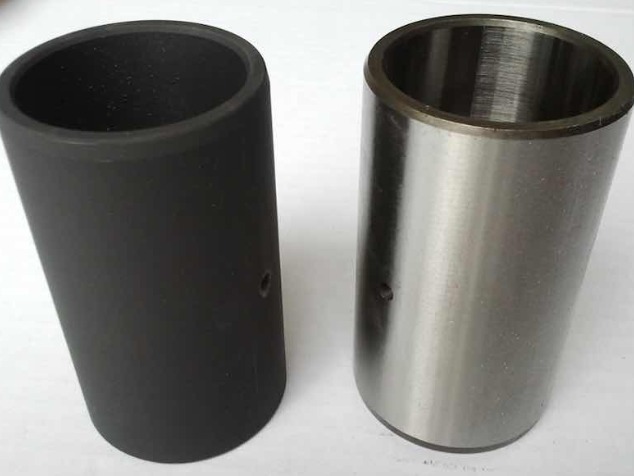
A part can look ready for paint the day it comes off the line, then fail adhesion testing a week later and nobody quite knows why. Nine times out of ten, the surface just was not prepped properly before the coating went on.
Flaking paint, uneven finishes, rust creeping in under a topcoat, manufacturers see this constantly and it almost always traces back to the same thing, the surface was never really ready for what got applied on top of it.
Best Phosphating Plating fixes this at the root. It converts the outer layer of the metal into a rough, slightly porous surface that grips paint and oil in a way bare steel simply cannot.
A large share of coating warranty claims across metal manufacturing come down to exactly this, and most of it was preventable. Get Best Phosphating Plating right before final finishing and that risk drops considerably.
Vinita Enterprises out of Bhiwadi keeps coming up when manufacturers talk about who does this reliably across bigger production runs.
Why Best Phosphating Plating Matters for Your Business
Bare metal just does not hold paint or oil well. Too smooth, too reactive, and that combination leads to peeling, rust working its way in underneath, coatings that give out early.
Best Phosphating Plating actually changes the surface chemistry. What comes out is a slightly textured, crystalline finish that grips coatings far better than untreated steel ever would.
Automotive parts, industrial equipment, fasteners, all of it depends on getting this step right. Skip it and even a well applied topcoat starts failing sooner than it should.
How Best Phosphating Plating Works
Cleaning first, same as with most plating work. Oil, grease, scale, none of that can still be there once the phosphate solution goes on.
From there the part goes into a phosphating bath, zinc or manganese based depending on what it needs. A reaction happens on the surface itself, building a layer of insoluble phosphate crystals.
Rinsing comes next, often followed by a sealing step to lock everything in. After that the part is ready for paint, oil, or whatever finish the job actually calls for.
Key Benefits of Best Phosphating Plating
Better Coating Adhesion
Paint and oil grip a phosphated surface far more effectively than bare metal.
Improved Corrosion Resistance
Adds a real barrier against rust, especially paired with a topcoat on top.
Reduced Friction
Some phosphate types cut down surface friction, useful for moving or sliding parts.
Cost Effective Pretreatment
Cheap compared to what a coating failure ends up costing later.
Wide Industrial Use
Automotive, machinery, fastener manufacturing, all lean on it regularly.
Industries That Rely on Best Phosphating Plating
Automotive body panels and fasteners need it before paint goes anywhere near them. Industrial machinery leans on it to stretch out service life under paint or oil.
Firearms and tooling parts often use manganese phosphating specifically for wear resistance. Different industries, same idea underneath it, get the surface ready so whatever comes next actually sticks.
Best Phosphating Plating Compared to Other Methods
Zinc electroplating and phosphating are not solving the same problem. Electroplating tends to be the finish itself, phosphating is usually a pretreatment step before paint or oil.
Degreasing or sandblasting alone just cleans the surface. Best Phosphating Plating goes further, changing the surface chemically, which is exactly why it holds up so much better under long term coating stress.
Choosing the Right Partner for Best Phosphating Plating
Bath chemistry and process control matter more here than people expect. A provider watching concentration, temperature, and timing closely will turn out far more consistent results than one treating it as an afterthought.
In Bhiwadi, Vinita Enterprises has earned a reputation for handling Best Phosphating Plating work with the kind of consistency repeat production runs actually need.
Going with someone experienced usually means fewer coating failures later and a lot less time spent chasing adhesion problems after the fact.
Final Thoughts
Coating failures almost never start with the paint itself. They start earlier, with a surface that was never properly prepared for what got applied on top of it, and closing that gap is really the whole point of Best Phosphating Plating. It is not a decorative extra or something worth cutting to save a bit of time on the line, it is the foundation everything else depends on, paint, oil, any protective coating that comes after. Skip it and the consequences show up down the road as flaking, rust working in from underneath, warranty claims tracing back to a surface problem nobody caught in time to fix cheaply. A provider who actually controls bath chemistry, temperature, and timing produces a phosphate layer that performs the way it should, run after run, instead of one that looks fine on paper and falls apart under real conditions. Manufacturers treating this step as essential rather than optional tend to see fewer returns and fewer complaints once their products reach customers who expect the finish to last. For any operation applying paint or protective coatings at real scale, this stays one of the more overlooked but genuinely useful steps available, quietly heading off a category of failure that costs far more to fix afterward than it would have to prevent from the start.